NSF VISIONS ‘22 Expedition
- Details
- Created: Friday, 27 October 2023 17:58
NSF VISIONS ‘22 Expedition
R/V Thomas G. Thompson August 9 – September 15, 2022
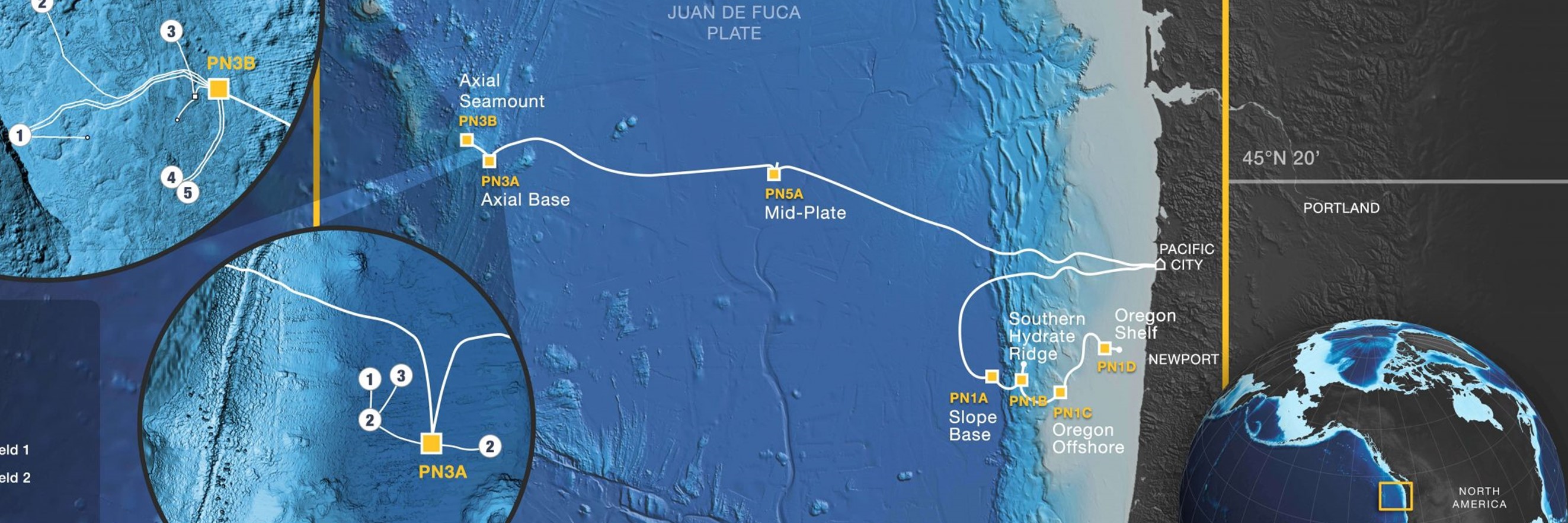
From August 9 – September 15, 2022, 8 CSSF team members performed maintenance and installation on the National Science Foundation’s (NSF) Ocean Observatories Initiative’s (OOI) Regional Cabled Array (RCA) for the University of Washington (UW) aboard the UW’s R/V Thomas G. Thompson as part of the VISIONS ’22 expedition. The science team was largely from the University of Washington’s School of Oceanography, with one member from Gray’s Harbour College, and the engineering team was largely from the UW’s Applied Physics Laboratory, with one member from Oregon State University. Guest participants were from the UW, the University of St. Andrews, Woods Hole Oceanographic Institution, Carleton College and the University of Bremen.
Read more: NSF VISIONS ‘22 Expedition
NEPDEP 2023 Expedition
- Details
- Created: Tuesday, 01 August 2023 10:21
NEPDEP 2023 Expedition
CCGS John P. Tully May 28 – June 12, 2023
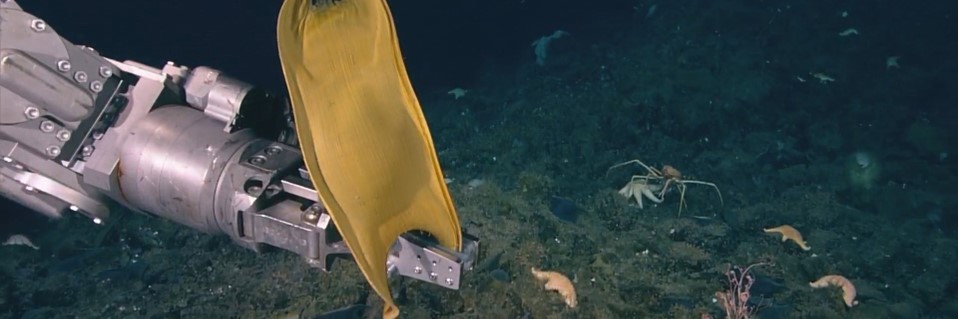
On May 28, 2023, seven Canadian Scientific Submersible Facility team members assisted scientists from the Department of Fisheries and Oceans Canada, Pacific Region in the exploration of seamounts, hydrothermal vents and cold seeps off the coast of Vancouver Island, work which was conducted aboard the Canadian Coast Guard Ship, the CCGS John P. Tully, as part of the Northeast Pacific Deep-sea Exploration Project (NEPDEP). Researchers from several institutions participated, including principal investigators, graduate students and professionals from the University of Victoria, Dalhousie University, Memorial University, the University of Gothenburg, the Hakai Institute, Ocean Networks Canada, the Royal British Columbia Museum, Natural Resources Canada, the GEOMAR Hemholtz Centre for Ocean Research Kiel and Scripps Institute of Oceanography. ROPOS provided access to six unique habitats, the: Explorer Seamount (‘Spongetopia’ & ‘Coraltropolis’), Explorer Ridge Hydrothermal Vents (‘Recordbreaker’ & ‘Old Area’), Tuzo Wilson Seamount NEPDEP 58 Nursery, Winona Cold Seeps (‘Twins’ & ‘Blowout’), Deep NEPDEP 35 Seamount and Hesquiat Slope Cold Seeps. Highlights of our mission included: coming across a whale fall, capturing the birthing of a Pacific white skate (Bathyraja spinosissima) on video and a mother octopus (Graneledone boreopacifica) fending off king crabs from her eggs.
NSF-OOI RCA and ROPOS Long-Term International Collaboration
- Details
- Created: Friday, 27 October 2023 14:06
NSF-OOI RCA and ROPOS
Long-Term International Collaboration
December 8, 2022
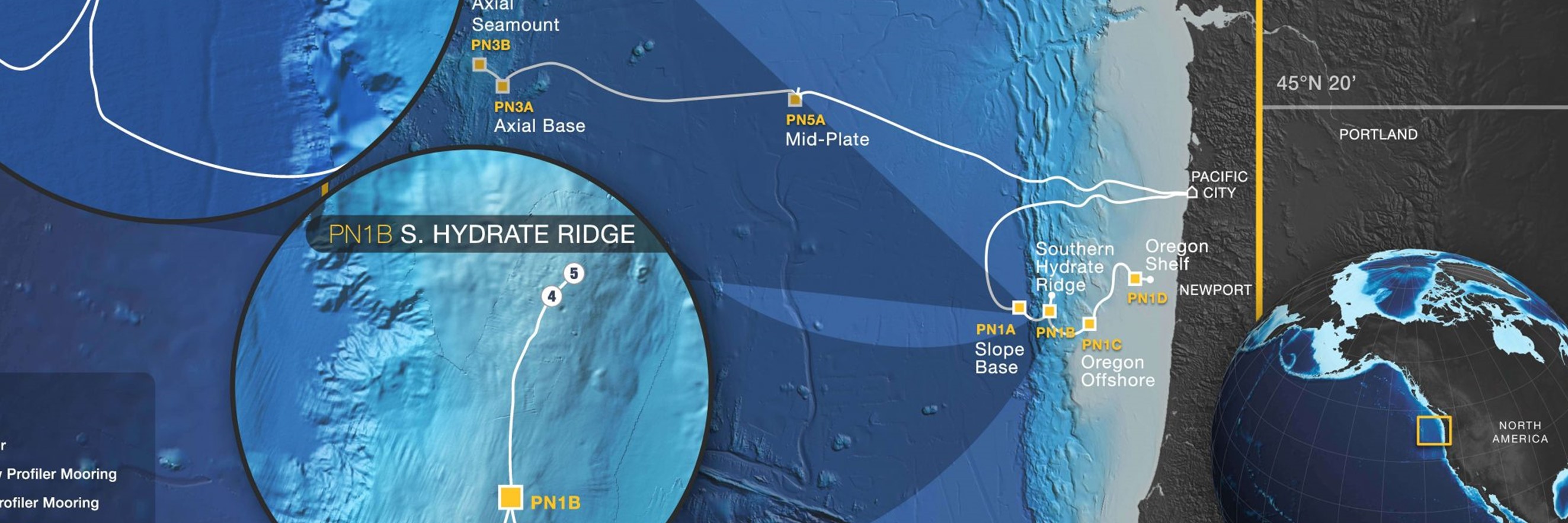
The National Science Foundation Ocean Observatories Initiative’s Regional Cabled Array (NSF-OOI RCA) is an underwater cabled observatory that extends 480 km off the coast of Newport, Oregon, USA and is run by the University of Washington’s (UW) School of Oceanography and Applied Physics Laboratory. The Regional Cabled Array streams real-time data to scientists on the geological, oceanographic and biological processes spanning the Juan de Fuca tectonic plate, including those contributing to the productive coastal systems and underwater volcanism off the coast of Oregon. Servicing of the array is achieved through NSF’s VISIONS expeditions, which provide a venue for UW student experiential learning and scientific outreach initiatives.
Read more: NSF-OOI RCA and ROPOS Long-Term International Collaboration
Workshop on Advanced Benthic Surveying Tools for Marine Science
- Details
- Created: Tuesday, 20 June 2023 17:19
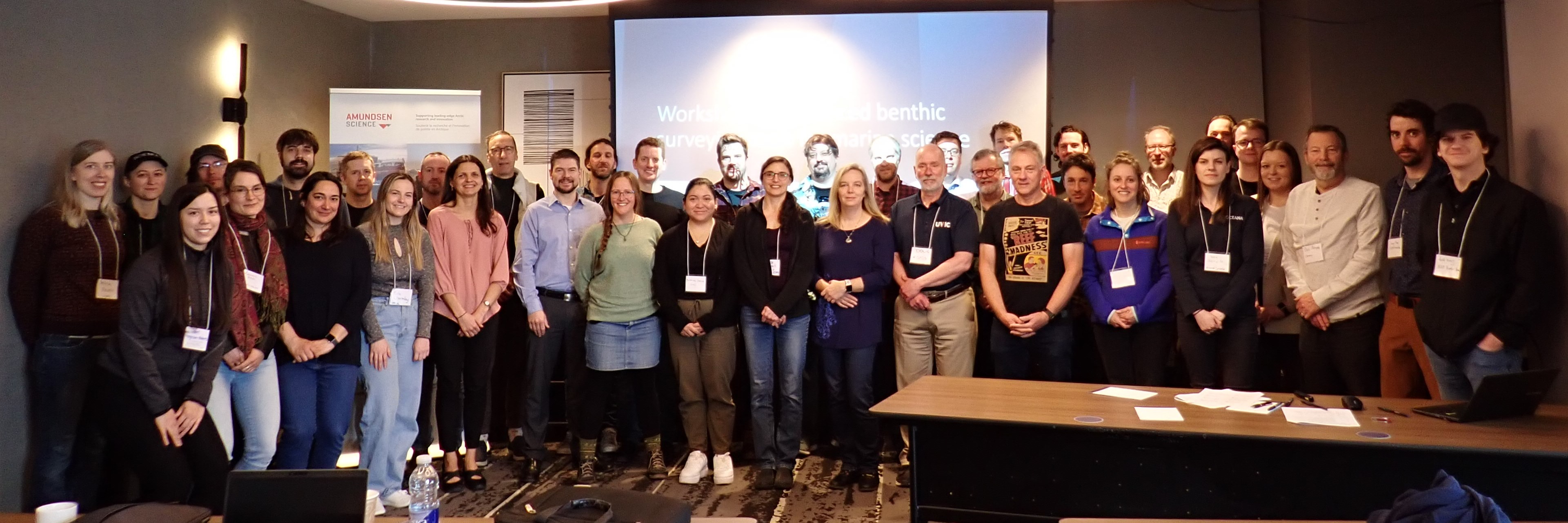
Advanced Benthic Surveying Tools for Marine Science Workshop
Montréal, Canada, August 18 – 20, 2023
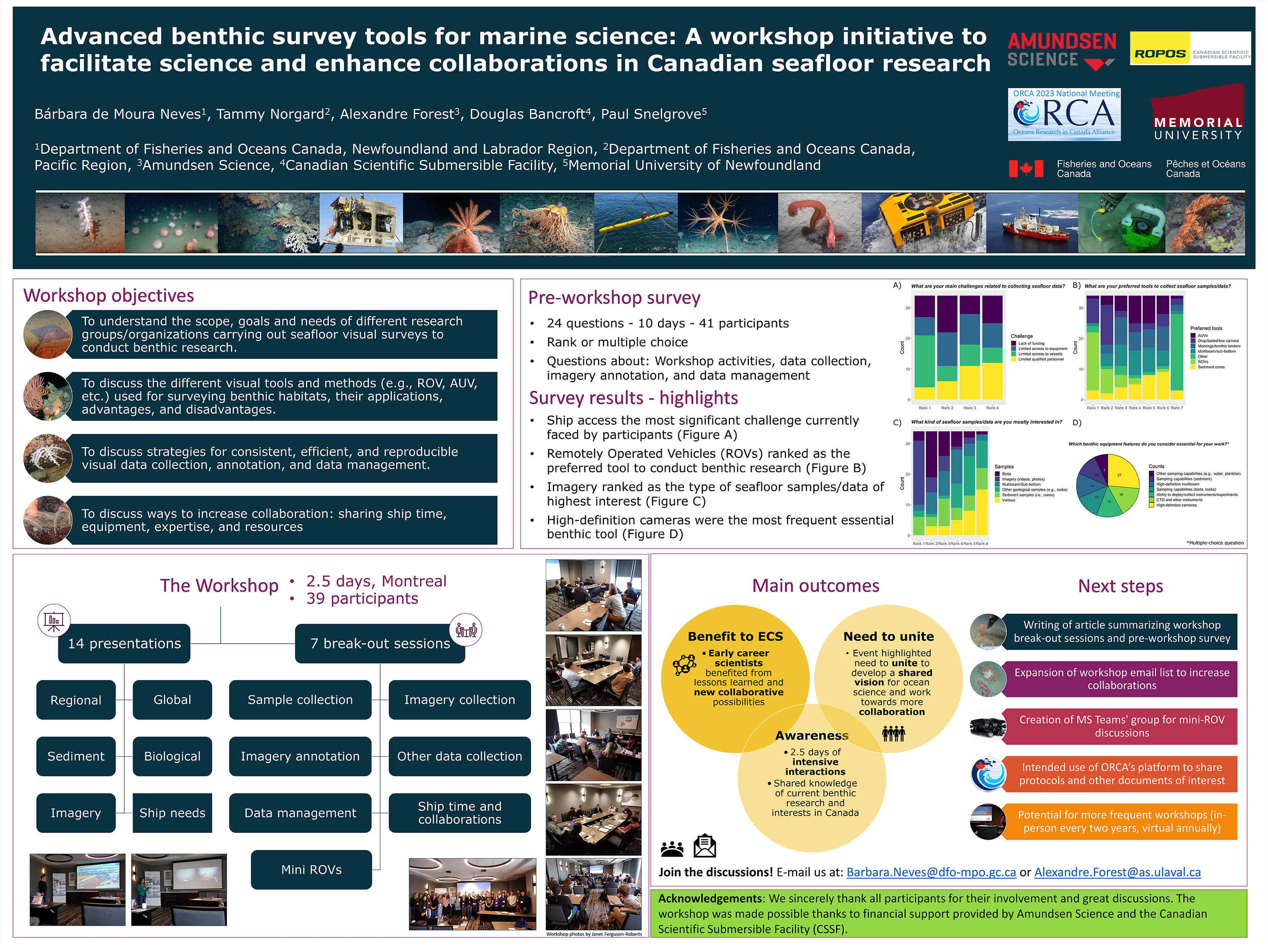
In April 2023, 39 Canadian marine scientists from government, academia, and the not-for-profit sector, met in Montréal to advance plans for benthic science mission, ship access, funding, and equipment availability. The CSSF was a cosponsor of this event.
The primary focus was on advanced survey tools such as remotely operated vehicles (ROVs) and autonomous underwater vehicles (AUVs) required to better understand marine ecosystem health, benthic biodiversity, and geological processes. During the various discussion’s sessions, participants highlighted the need for more collaborative approach and for more partnerships that can ensure consistent, efficient, and reproductible workflows and methodology among research groups.
After the Workshop, a poster was created to share at an Oceans Research in Canada Alliance (ORCA) meeting in early June the objectives of the activity, the pre-event survey, the details of the 2-day event, the main outcomes, and next steps.
Photo Credit: Janet Ferguson-Roberts, Canadian Scientific Submersible Facility. Poster: Bárbara de Moura Neves et al.