
Amundsen Expedition 2026
CCGS Amundsen July 10 – August 6, 2026
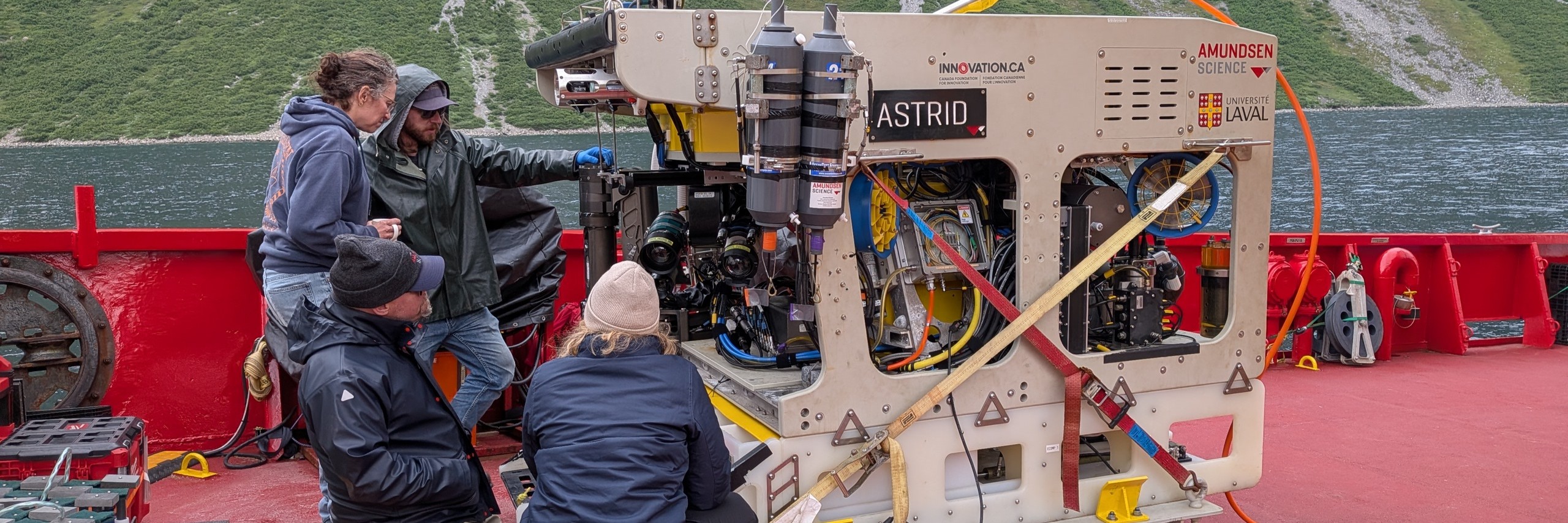
From July 10 – August 6, 2026, 3 CSSF team members supported Amundsen Science aboard the CCGS Amundsen in the Labrador Sea for Leg 1 of the Amundsen Science 2026 Expedition. During this leg, scientific operations were carried out for two ongoing programs: the Government of Nunatsiavut’s Imappivut Program and Fisheries and Oceans Canada’s Benthic Refuges Program. The science team’s objectives for the Imappivut Program were to understand the distribution of vulnerable marine ecosystems in the coastal and marine waters of Nunatsiavut, the Labrador Sea and adjacent regions, as well as to explore the continental shelf and marine ecosystems of two fjords within the Torngat Mountains National Park. The science team for the Benthic Refuges Program focused on monitoring sensitive benthic areas within marine refuges in the Eastern Arctic, including the Hatton Basin and Davis Strait conservation areas. A remotely operated vehicle was required to capture imagery of and collect samples from vertical rock walls and was accomplished using Amundsen Science’s ASTRID ROV.
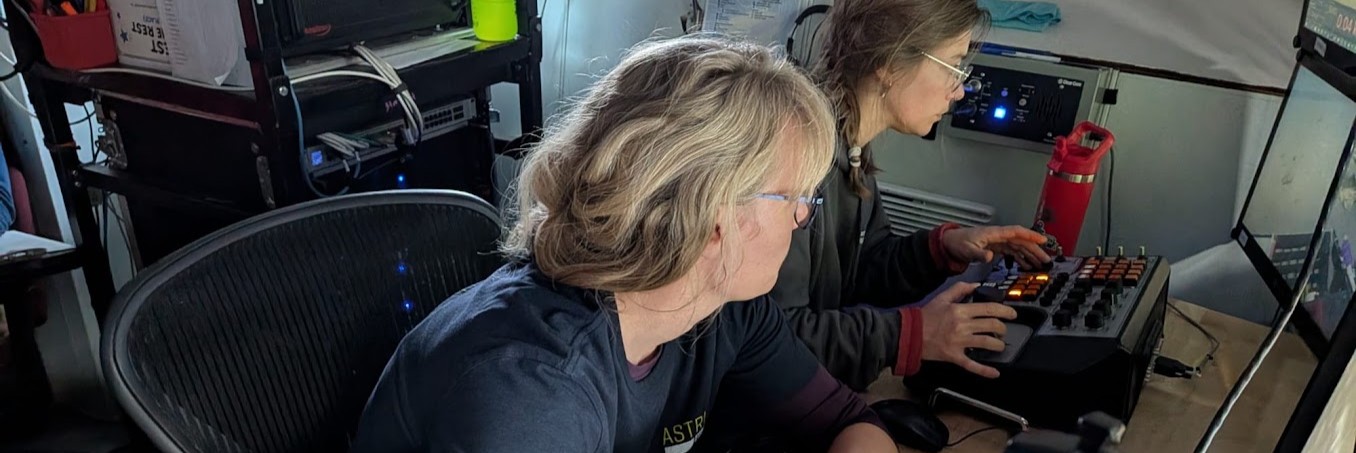

Lara Gemmrich, CSSF’s Navigation and IT Technician, worked with two other CSSF team members for this expedition, Simon Jones and Trevor Shepherd, as well as two ROV Technicians from Amundsen Science, Gabrielle Inglis and Reyna Doerwald. The ROV Team conducted video transects and collected several samples such as cold-water corals, sponges and sea stars for different studies, in addition to sediment push core and seawater samples. They visited several sites including the Hanging Gardens site off Makkovik, which has strong currents and overhanging cliffs. These features create a habitat where corals and sponges thrive, making it an area of scientific interest. Highlights for the science team included finding the location of another coral hanging cliff in the Makkovik area and a live streaming of the discovery, the successful deployment of larval settlement plates, as well as sponge tagging and coring in Hatton Basin, a challenging site with exceptionally high currents, and the recovery of corals stained for a growth study in 2021 using a chamber built by CSSF’s Manager of Mechanical Systems, Peter Lockhart.
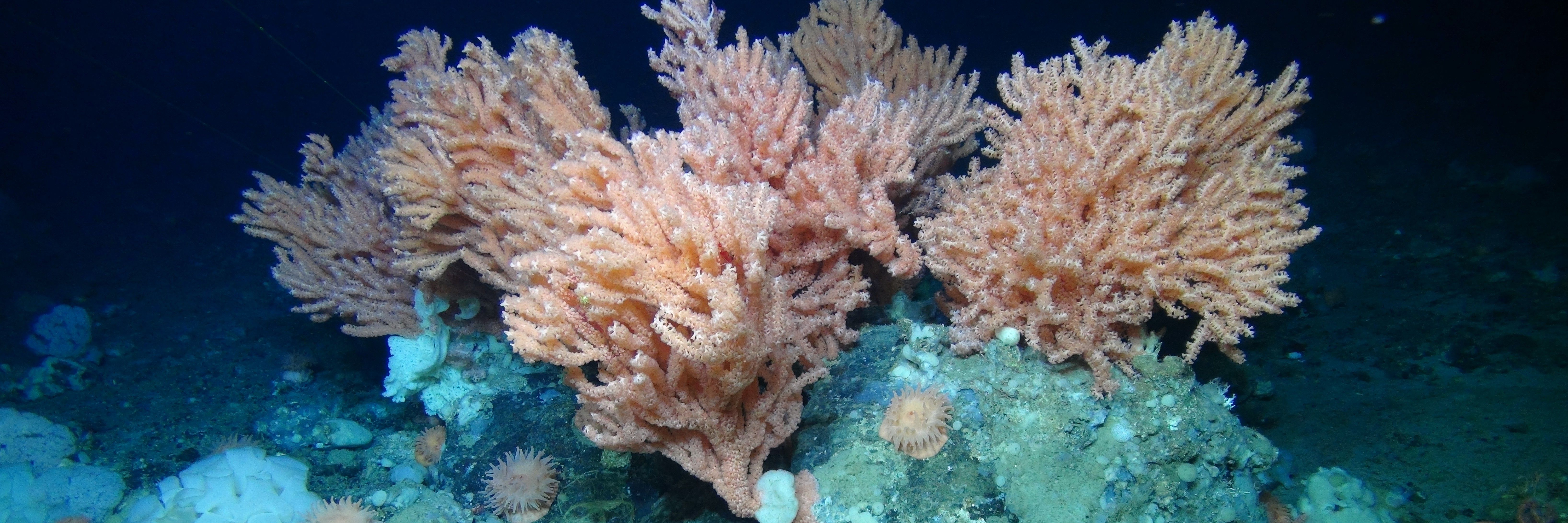
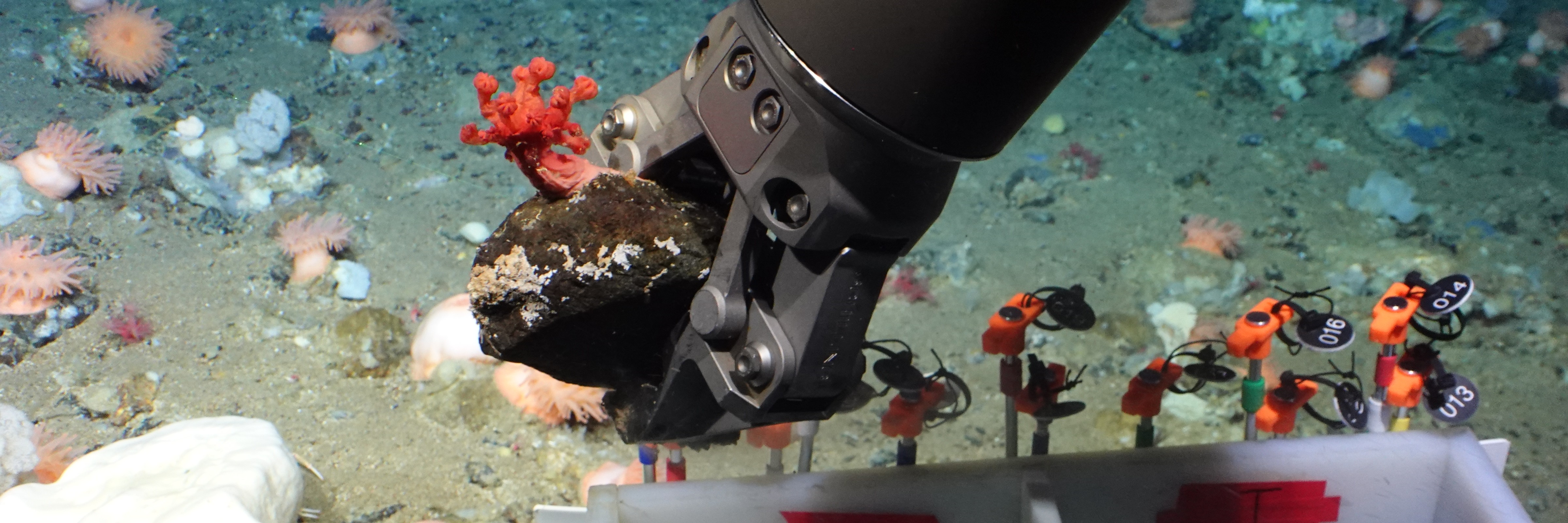
There were many highlights for Lara, including meeting all the people, recovering the stained corals from when Peter was there, and seeing the fjords and all the science. One of the main highlights was that this ROV team was the first ever to have more women than men, which was noted by many people involved in the expedition. Another highlight for her was getting the chance to fly ASTRID together with Reyna. Gabby had put them in charge, with Reyna piloting and Lara sampling, which Lara felt was exciting because they were the two newest people on the team. The rest of the ROV Team took the time to train Lara and Reyna, and Lara got to use the manipulator arm (there was only one on ASTRID for this expedition to reduce weight of the ROV), which was exciting for her because it is very complex to use and it was the first time she ever got to collect samples with it. Trevor took the time to train her with the arm on ASTRID, first getting her to touch different parts of the ROV and to use the different joints on the arm, then to pick up rocks and brittle stars. Another highlight was the first dive on the rock wall cliff. She explained that usually, when underwater, you mostly see rocks or sand and not much life, but as you came upon this rock wall, it was just covered in corals, which were bright orange, pinkish and surprisingly large. It was also a different feeling to pilot next to a vertical surface, as opposed to just above the seafloor, because they could only know how far up off the bottom they were by using the altimeter. They were not able to see the seafloor, as they usually are. She emphasized that the ROV Team was able to pull off a good number of well-executed dives, and in high current areas — which she noted is challenging to do.
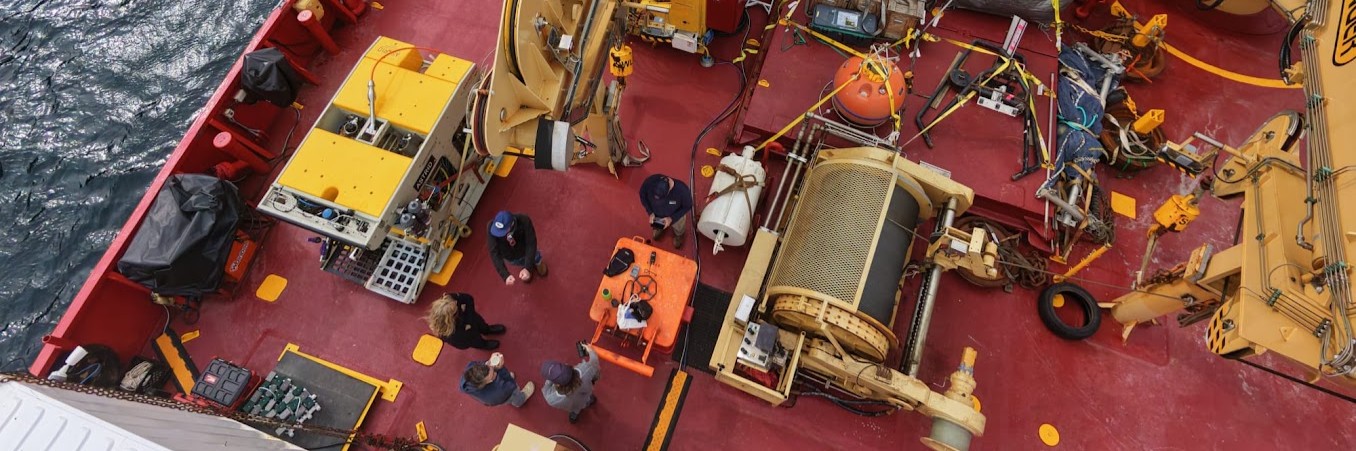
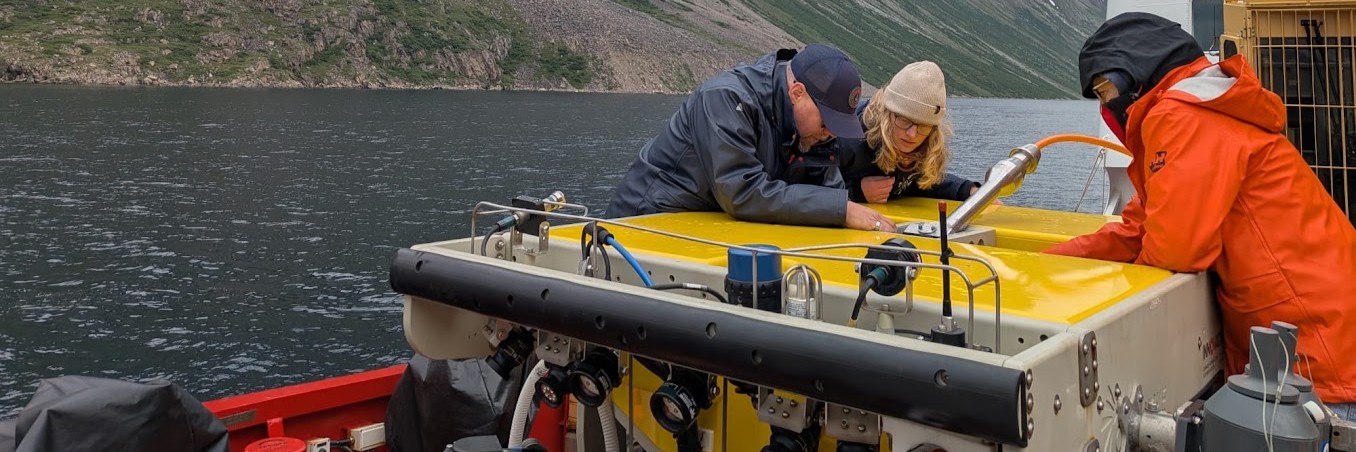
Our team encountered two challenges on this expedition: 1) piloting in strong currents and 2) losing electrical power to ASTRID. Both cases reduce the maneuverability of the submersible and are situations where precautions must be taken to ensure there is no damage to the ROV and that everyone on the ship remains safe. When they were in a high-current area, Lara credited all those outside of the ROV Team who worked to keep operations running smoothly, explaining that there were many people on deck and on the bridge who were watching the tether, keeping an eye on the current and looking out for changing conditions. She also noted that, as a member of the ROV Team, you have to be very conscious of what you are doing and everything that is going on. The power to ASTRID was also lost on one dive. With no power, the ROV’s cameras, sonar and all other instruments were off, making it difficult to know what was happening at depth. So, our team stayed calm, went slowly and made note of what time and where ASTRID was on the seafloor when the power was lost. Based on the information about the current, they could keep a rough track of ASTRID’s location. Once ASTRID was back on deck, they found that seawater had gotten into its rotating junction box. So, the ROV Team diligently worked to repair the electrical and fibre optics cables, which now had to be re-terminated (the tips of the cables needed to be prepared for connection for a second time) and reconnected. Overall, our team handled both challenges by keeping in close communication with the ship’s crew and working with them to stay on top of everything.
As part of their scientific outreach, Amundsen Science livestreamed part of the first dive in Makkovik on July 16th on YouTube.
Credits: This expedition summary was written by Janet Ferguson-Roberts (Communications and Development; CSSF) in consultation with the ROPOS Team and Bárbara de Moura Neves (Chief Scientist and ROV scientist during Leg 1; DFO-NL). Information on the scientific objectives and expedition participants was included from the Amundsen Science website. Photo credits: ROV troubleshooting (Amundsen Science), Lara and Reyna piloting (Trevor Shepherd, CSSF), corals and manipulator arm with coral (Amundsen Science), bird’s eye view of the deck (Simon Jones, CSSF), group photo of ROV team (Jennifer Higdon, Fisheries and Oceans Canada; from left to right, Gabby Inglis, Simon Jones, Reyna Doerwald, Lara Gemmrich and Trevor Shepherd).
